

 By
By The Google Pixel 10a has finally arrived, and it brings with it a sense of deja vu that the smartphone world has rarely seen. When you first lay eyes on the Google Pixel 10a, you might be forgiven for thinking you are looking at the previous year’s model, as the design remains effectively identical to the Pixel 9a. From the aluminum sides to the plastic back, Google has opted for a “if it ain’t broke, don’t fix it” strategy that feels remarkably like a direct re-release of their mid-range hardware.
The Design Reality of the Google Pixel 10a
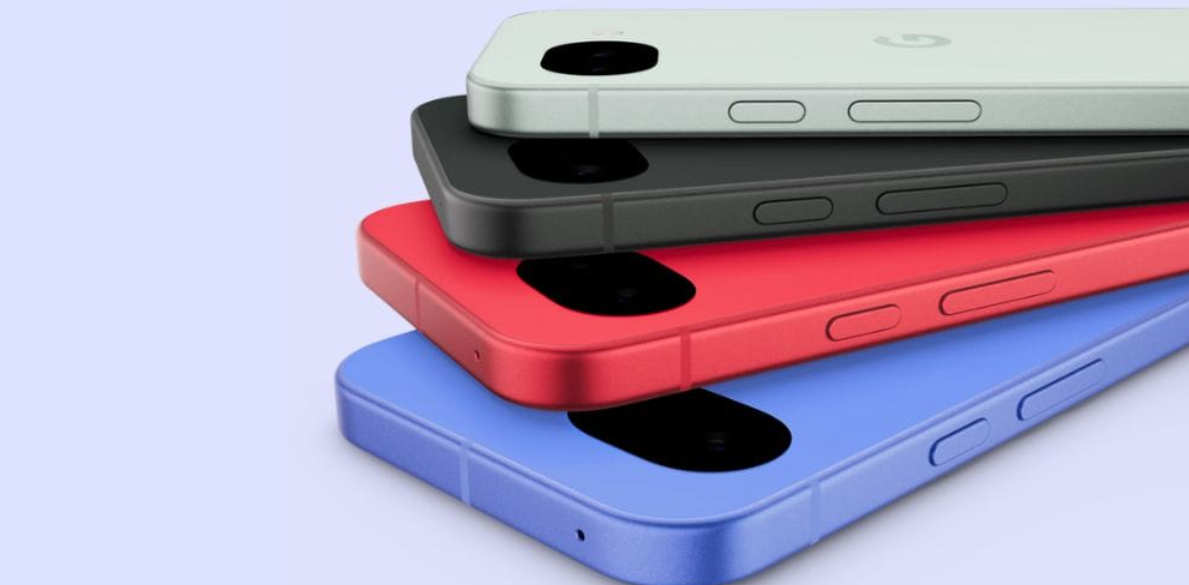
At first glance, the Google Pixel 10a is a mirror image of its predecessor. It maintains the same dimensions, the same generic and flat shape, and even the same materials, choosing plastic for the back instead of the glass found on flagship models. One design choice that remains is the slightly thicker chassis, which Google utilizes to completely eliminate the camera bump while fitting in a substantial 5,100 mAh battery.
The phone continues to be IP68 certified, and the physical layout—from the buttons to the antenna ports and speakers—remains unchanged. The only external identifier for the Google Pixel 10a is its new color palette, featuring shades named Fog, Obsidian, Berry, and Lavender. The display is also a familiar 6.3-inch panel with rounded corners and semi-thick bezels, still defaulting to a 60 Hz refresh rate even though it is capable of 120 Hz.
Under the Hood: Does the Google Pixel 10a Bring Anything New?
While the exterior of the Google Pixel 10a feels like a trip down memory lane, the internal specifications tell a similar story. Surprisingly, the device features the same Tensor G4 chip from the previous year rather than upgrading to the newer Tensor G5 found in higher-end models. It retains 8 GB of RAM and 128 GB of starting memory, all while maintaining the $499 starting price.
However, there are a few incremental upgrades if you look closely at the spec sheet. The Google Pixel 10a display is roughly 10% brighter than before, reaching up to 30,000 nits peak brightness, and is now protected by Gorilla Glass 7i. Charging speeds have seen a minor boost as well, moving from 23W to a 30W peak charging rate for wired connections, and wireless charging has improved from 7.5W to 10W. Additionally, in certain regions, this model now supports satellite SOS functionality for emergency services when no cellular signal is available.
The Google Pixel 10a Software Experience and AI Features
Google seems to be leaning heavily into the idea that the Google Pixel 10a is a software-defined product where the hardware is secondary to the user experience. Because it runs on the Tensor G4, it still supports all the signature Pixel AI features that users have come to expect. This includes “Best Take,” which uses the dual-camera system (48 MP main and 13 MP ultrawide) to merge group photos into the perfect shot by analyzing faces across multiple frames.
The device also includes “Camera Coach” to help users take better photos, alongside classic Google features like Call Screening, Hold for Me, and Clear Calling. For long-term value, Google is promising seven years of software and security updates. Furthermore, the Google Pixel 10a supports Quick Share, which now allows for native file sharing between Android and Apple devices, functioning similarly to AirDrop.
Is the Google Pixel 10a Worth Your $499?
Deciding if the Google Pixel 10a is right for you depends on your current device. If you are coming from a Pixel 9a, there is almost no hardware incentive to upgrade, as the core components—the chip, the RAM, and the cameras—remain the same. Many tech enthusiasts were hoping for the addition of magnets for accessory compatibility or a bump in base storage to 256 GB, but Google did not include these updates.
That said, for those who haven’t updated their phone in three or four years, the Google Pixel 10a remains a decent deal at $499, offering a clean software experience and a reliable battery. It feels like a “routine” release—a phone made to fill a slot on a shelf rather than to push the boundaries of innovation.
To see how this fits into the broader Google ecosystem, check out our internal post on the 7 Revolutionary Ways Nano Banana is Killing Photoshop Right Now
Related External Resource: For official technical specifications and availability, visit the Official Google Store.